
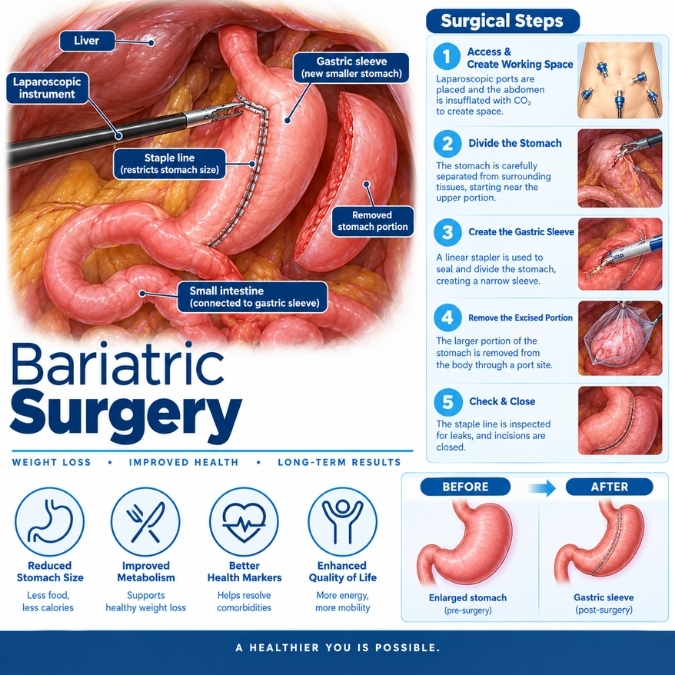
Weight loss surgery is a highly effective, life-changing surgical procedure for individuals suffering from severe obesity. Bariatric surgery is usually performed with minimally invasive techniques, and the medical names for these procedures include Laparoscopic Gastric Bypass or Laparoscopic Sleeve Gastrectomy.
About the Stomach and Digestive System
The stomach is a muscular organ that rests in the upper abdomen, and the digestive tract extends from there into the intestines. Their main purpose is to collect, break down, and absorb nutrients from the food you eat.
Bariatric procedures modify this system by either reducing the size of the stomach, rerouting the intestines, or both. Alteration of the digestive tract restricts the amount of food you can eat and changes how nutrients are absorbed. Modification of the stomach is not associated with an inability to digest food; rather, it resets your metabolism and encourages healthier portion control.
What causes severe weight problems?
Severe obesity problems are usually caused by a complex combination of metabolic, genetic, environmental, and lifestyle factors that lead to an excessive accumulation of body fat.
It is uncertain exactly why some people struggle significantly more with weight loss than others, but risk factors include genetics, underlying medical conditions, advancing age, and being overweight since childhood. Severe obesity is also more complex as you get older, and some people may have a strong family history of metabolic disorders.
While healthy diet and exercise are foundational, there is no single known means to prevent severe obesity in all individuals.
Excessive weight can block the body’s ability to regulate insulin and blood pressure effectively, resulting in severe joint pain, sleep apnea, type 2 diabetes, heart disease, and a significantly reduced quality of life.
How are these problems found and treated?
Body Mass Index (BMI) calculations and comprehensive medical evaluations are most commonly used to diagnose severe obesity and qualify candidates for surgery. In a few more complex cases, other tests such as cardiac evaluations or sleep studies may be used to evaluate accompanying health diseases.
Severe, life-threatening obesity rarely goes away on its own. Some weight can be temporarily managed by making extreme dietary adjustments or taking medication. However, for those with a BMI over 40 (or 35 with related health conditions), this conservative treatment has a notoriously low, short-term success rate. Weight gain and associated medical conditions will eventually continue unless the body’s metabolic set point is surgically altered. Non-surgical treatments to achieve massive, sustained weight loss are largely unsuccessful for this specific patient group.
Surgical modification of the digestive system is the time-honored, safest, and most effective long-term treatment for severe obesity and its related metabolic diseases.
©2026. Dr. Benito Tan Jr.. All Rights Reserved.